Vietnam Consumer Trends: What Makes Vietnamese Buyers Different From the Rest of Southeast Asia
Vietnam is one of Southeast Asia’s fastest-growing consumer markets. But growth alone does not create successful brands.
Every year, international companies enter Vietnam with products that have already succeeded elsewhere in the region. Many struggle, not because the product is wrong, but because it was introduced the wrong way.
Understanding Vietnam consumer trends is no longer just a marketing exercise. It is a commercial advantage for businesses planning Vietnam market entry or selling in Vietnam.
Why Vietnam Is One of Southeast Asia’s Most Attractive Consumer Markets
Vietnam’s appeal goes far beyond headline GDP growth.
The country is home to nearly 100 million people, with a median age of around 33 [1], making it one of the youngest consumer markets in Asia. Its middle class is expanding rapidly, expected to grow from 13% of the population in 2021 to 26% by 2026 [2], and projected to exceed half the population by 2030.

The digital economy is growing just as quickly.
Today, Vietnam has around 78 million internet users, while 98% of adults own a smartphone [3]. E-commerce continues to expand at roughly 25% annually, with the market expected to reach US$28 billion in 2025 [4]. Social commerce has become a major driver of retail growth, with TikTok Shop sales increasing by almost 150% year-on-year during the first half of 2025 [5]. More than 70% of online shoppers are Gen Z and Millennials, making Vietnam one of the region’s youngest digitally active consumer markets [6].
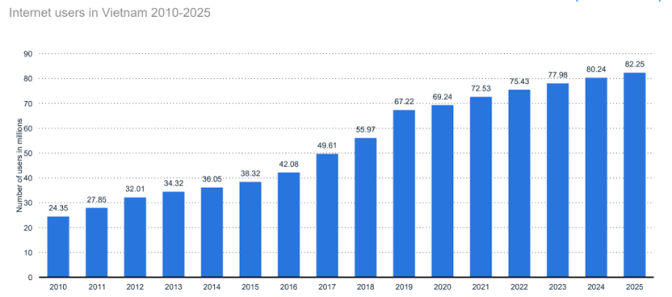
Figure 1. Internet adoption in Vietnam has more than tripled over the past 15 years, reaching over 82 million users in 2025. This rapid digitalisation has fundamentally changed how Vietnamese consumers discover, compare and purchase products.
Source: Statista.
Vietnam’s digital infrastructure has created one of the region’s fastest-growing e-commerce markets, fundamentally changing how consumers discover, compare and purchase products.
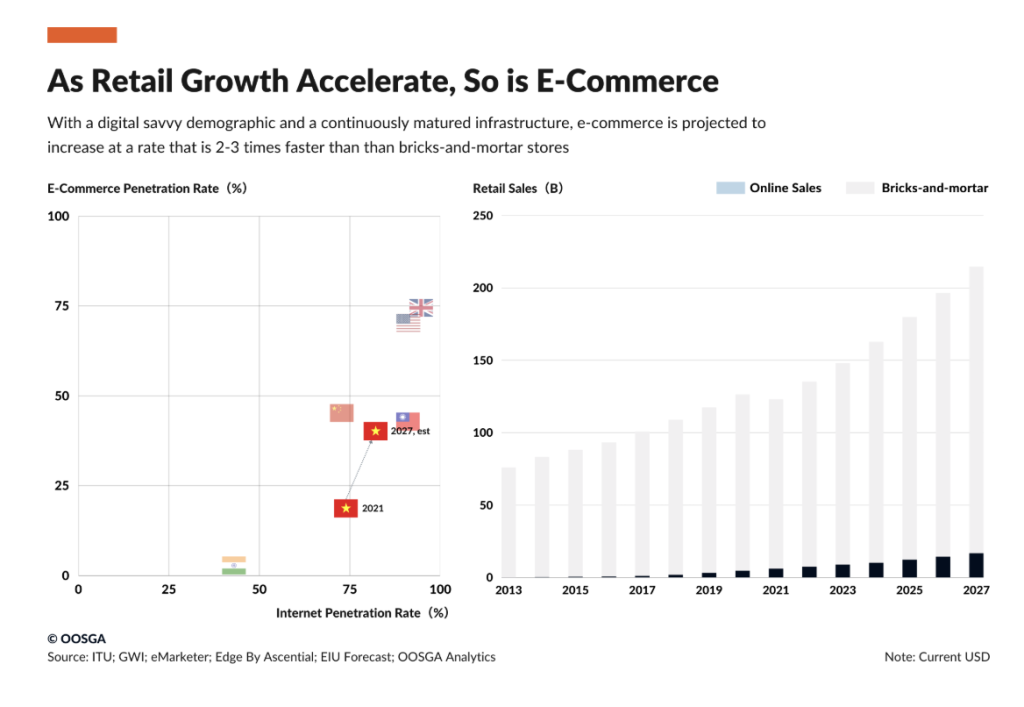
Figure 2. Vietnam’s rapid growth in internet penetration and e-commerce reflects the country’s increasingly digital consumer landscape.
Source: ITU, GWI, eMarketer, Edge by Ascential, EIU Forecast, OOSGA Analytics.
These numbers explain why Vietnam attracts international brands.
They do not explain why some succeed while others fail.
That difference lies in understanding Vietnamese consumer behavior rather than treating Vietnam as another version of Southeast Asia.
Vietnam Consumer Trends: Young, Digital and Highly Selective
Vietnam has one of the youngest populations in the region, but youth does not automatically translate into inexperienced consumers.
Vietnamese buyers are exposed to international brands every day through TikTok, Facebook, YouTube and cross-border e-commerce. They compare prices, read reviews and research products before making a purchase.
Consumers are willing to experiment with new brands, but loyalty is earned through consistent experience rather than advertising.
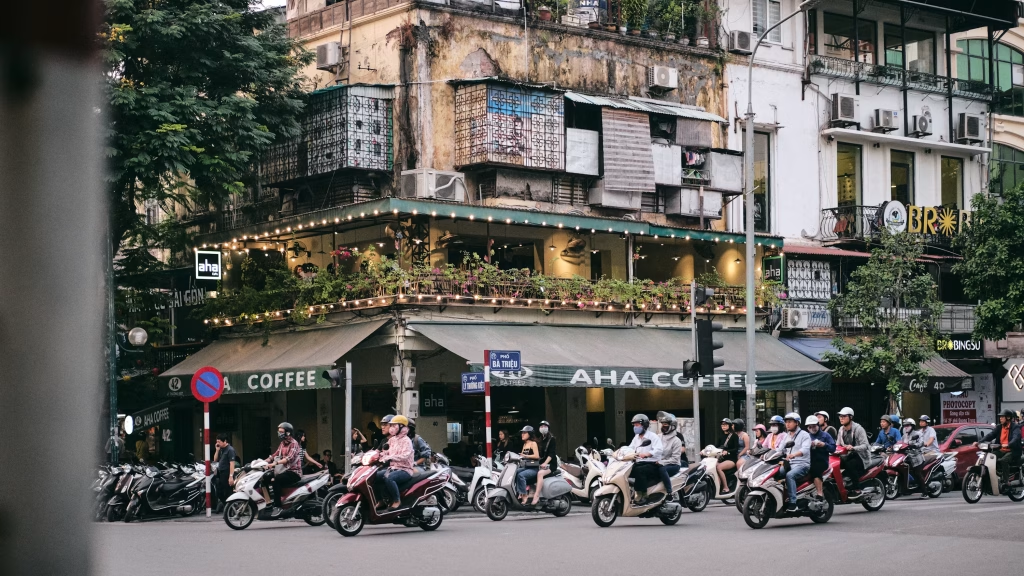
For businesses, awareness is only the beginning. Credibility determines whether customers stay.
Businesses that mistake curiosity for loyalty often spend heavily on customer acquisition while struggling to generate repeat purchases.
Vietnam Consumer Trends: Value Matters More Than Price
One of the biggest misconceptions about selling in Vietnam is that consumers simply choose the cheapest option.
Increasingly, they evaluate products based on overall value. Quality, convenience, customer service, design and brand reputation all influence purchasing decisions.
This is why premium coffee chains, beauty brands and consumer technology companies continue to grow despite strong price competition.
Competing only on discounts may generate short-term sales, but rarely creates long-term brand equity.
Vietnamese Consumer Behavior: Discovery Happens Across Multiple Platforms
The Vietnamese customer journey rarely follows a straight line.
A consumer may first discover a product through TikTok, check Facebook reviews, ask friends on Zalo, compare prices on Shopee or TikTok Shop, then complete the purchase days later.
Unlike many Western markets where search engines dominate discovery, social platforms play a central role in influencing purchasing decisions.
Content is therefore not simply advertising.
It has become part of the buying process itself.
Brands that overlook these behaviours often invest in campaigns that generate visibility without generating sales.
Vietnam Consumer Behavior: Fast Trends, Slow Loyalty
Vietnamese consumers adopt new brands quickly, but loyalty takes much longer to build.
A restaurant, beauty brand or consumer product can gain attention within days through creators, livestream commerce and social media. However, consumers also share poor experiences just as quickly through Facebook communities, TikTok and online reviews.
For businesses entering Vietnam, early visibility should not be mistaken for long-term success. Consistent product quality and customer experience are what turn initial interest into lasting trust.
Vietnam Market Entry: Why Local Context Still Wins
Many international companies develop one regional campaign for Southeast Asia.
Vietnam frequently requires something different.
Language is only one part of localisation.
Shopping behaviour changes around Tết, social engagement differs across platforms, and purchasing decisions are heavily influenced by local creators and online communities. While cashless payments continue to grow, cash-on-delivery remains an important option for many consumers, reflecting how trust still shapes the buying journey.
The brands that perform best are not those that simply translate global campaigns.
They adapt them to how Vietnamese consumers actually behave.
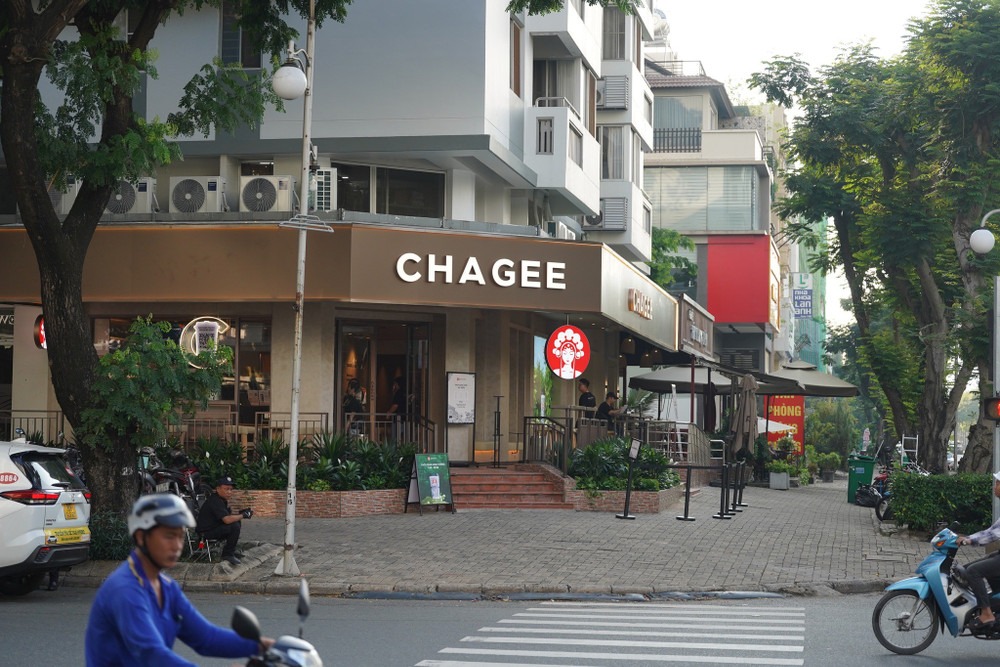
Case Study: CHAGEE and the Cost of Missing Local Context
When Chinese tea brand CHAGEE prepared to enter Vietnam, public attention quickly shifted away from its products and towards its brand communication.
Vietnamese consumers raised concerns over imagery displayed on the brand’s mobile application that appeared to reference China’s “nine-dash line” claim in the South China Sea. The issue spread rapidly across social media, prompting widespread criticism and calls for a boycott before the brand had formally established itself in the market. CHAGEE quietly removed the app from Vietnamese app stores, but notably never issued a public apology, a decision analysts say prolonged the backlash rather than resolving it [7].
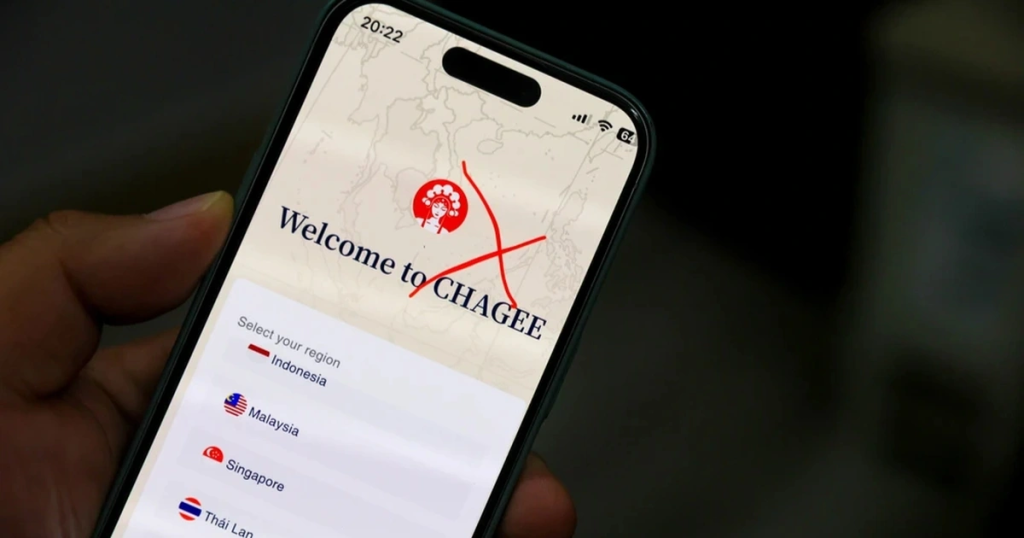
The reaction was never about tea.
It reflected how strongly Vietnamese consumers respond to issues involving national identity, culture and sovereignty. In Vietnam, commercial success is closely tied to public trust, and trust can be lost before consumers ever experience the product itself.
For international businesses, the lesson extends well beyond one brand. Localisation is not limited to translating marketing materials or adapting product packaging. It also requires understanding cultural sensitivities, historical context and how local audiences interpret brand communication.
While the incident centred on a geopolitical issue, it demonstrated how quickly consumer sentiment can shift when brands overlook local cultural and historical sensitivities.
For companies planning Vietnam market entry, cultural due diligence should sit alongside commercial, legal and operational planning. Entering the market without understanding local context can create reputational challenges that no advertising budget can easily repair.
What We Would Advise
Businesses planning Vietnam market entry should avoid treating Vietnam as simply another Southeast Asian market.
Consumer behaviour is not only a marketing consideration. It influences commercial decisions across pricing, distribution, retail strategy, partnerships and long-term market positioning. Understanding how Vietnamese consumers evaluate products and build trust can help businesses make better decisions before significant investment is committed.
Vietnam presents considerable opportunities, but success depends on adapting to the local market rather than applying regional assumptions. The businesses that perform best are usually those that invest in understanding the market before attempting to scale within it.
References
[1] United Nations, World Population Prospects 2024 — Vietnam’s median age reached approximately 33 years in 2025.
[2] World Bank / Vietnam Briefing, “Understanding Vietnam’s Middle Class: Size, Spending Patterns, and Opportunities for Businesses” — middle class projected to grow from 13% (2021-23) to 26% of the population by 2026.
[3] DataReportal / GWI — Vietnam internet and smartphone adoption figures.
[4] Vietnam Ministry of Industry and Trade, reported via VietnamNet, “Vietnam’s E-commerce Forecast to Hit USD 28 Billion in 2025” — B2C e-commerce forecast to grow 25.5% in 2025, reaching USD 26-28 billion.
[5] Vietnam Briefing / Vietnam Ministry of Industry and Trade — TikTok Shop Vietnam GMV grew approximately 148% year-on-year in H1 2025, reaching about 42% market share.
[6] Vietnam Briefing, “Vietnam’s E-Commerce Sector Outlook” — more than 72% of online shoppers are Gen Z (under 27) and Millennials (28-44).
[7] VietnamNet / Marketing-Interactive / Studocu case analysis — CHAGEE removed its app from Vietnamese app stores in March 2025 but did not issue an official public apology; the map was later altered on some platforms.